Contact lenses are a practical alternative to glasses for many people, and many readers of this blog wear them while they are still deciding whether laser eye surgery is right for them. Lenses sit directly on the surface of the eye, so small habits make a real difference to comfort and eye health. Winter adds its own challenge: heated indoor air and long evenings in front of screens can make lenses feel dry and scratchy sooner than usual.
Below are the most common contact lens care mistakes and simple ways to avoid them. This is general information only. Your optician or eye doctor knows your eyes and your lens type, so always follow their instructions first.
Mistake 1: Topping Up Old Solution
It is tempting to add a little fresh solution to what is already in the case. The problem is that the old solution has already done its job of cleaning and disinfecting, and mixing it with new liquid weakens the result. Empty the case completely every time, rinse it with fresh solution (never tap water), and let it air dry upside down.
• Use fresh solution every time you store your lenses.
• Replace the lens case regularly, as advised on your solution packaging or by your optician.
• Never use saliva, tap water or bottled water to rinse lenses.
Mistake 2: Choosing The Wrong Solution
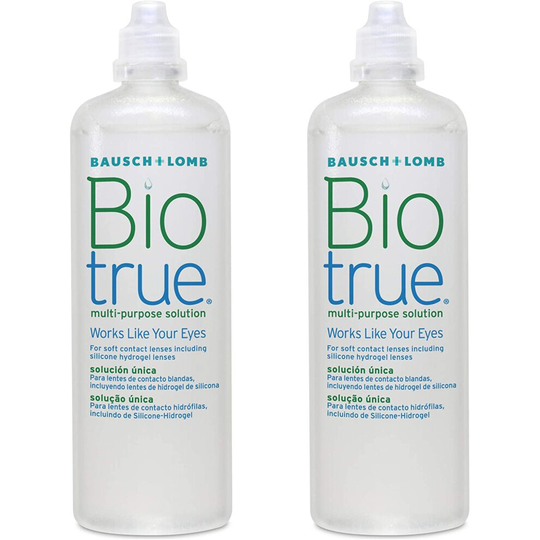
Not every solution suits every lens. Soft lenses, rigid gas permeable lenses and hydrogen peroxide systems all have their own products, and they are not interchangeable. A multi-purpose solution such as Biotrue Multi-Purpose Solution is designed for soft lenses, while gas permeable lenses need a product made for them. Peroxide systems must be used with the special case that comes in the pack and should never go directly into the eye.
If you are unsure which product matches your lenses, check the lens packaging or ask your optician before you switch.
Mistake 3: Wearing Lenses For Too Long
Daily, two-weekly and monthly lenses are made to be replaced on schedule. Stretching a monthly pair into a second month, or sleeping in lenses that are not approved for overnight wear, increases the chance of irritation and infection. A good rule is to remove lenses before sleep, before swimming and before a shower, unless your eye care professional has told you otherwise.
Signs that your eyes need a break include:
• Redness that does not settle after removing the lenses
• Blurred vision, discomfort or a feeling that something is stuck in the eye
• Increased sensitivity to light
• Discharge or watery eyes
If you notice any of these, take the lenses out and contact your optician or doctor promptly. Do not put the lenses back in until you have had advice.
Mistake 4: Skipping Hand Washing And Eye Checks
Clean, dry hands are the simplest form of protection. Wash with soap, rinse well and dry with a lint-free towel before touching your lenses. Put lenses in before applying make-up and remove them before taking make-up off.
Regular eye examinations matter too, even when your eyes feel fine. Your prescription can change, and an examination can pick up issues you would not notice yourself. If you are curious about life without lenses, an eye check is also the first step to finding out whether you could be a candidate for laser vision correction. Our article Do I Need LASIK Eye Surgery? explains what that assessment usually looks at.
A Simple Daily Routine
Good lens care quickly becomes a habit. Wash your hands, remove one lens at a time, clean it as your solution instructs, place it in a freshly filled case and close the lid. In the morning, empty the case, rinse it with solution and leave it to dry. You can browse lens solutions, cases and accessories in our contact lenses section, and keep a spare pair of glasses at home for days when your eyes simply need a rest.