Buying glasses online works well when you have three things ready: a recent prescription from a sight test, your pupillary distance, and the measurements of a frame that already fits you. With those, choosing a new frame is mostly a matter of style and budget.
Start with an eye test rather than the frame. The NHS recommends a sight test at least every two years for most adults, and more often if your optometrist advises it. After the test you are entitled to a copy of your prescription, and you can use it wherever you like.
Single vision glasses for distance or reading are the easiest to order online. Varifocals and strong prescriptions depend more on precise fitting measurements, so many people still have those fitted in person.
Reading your glasses prescription
A prescription lists values for the right eye (R or OD) and the left eye (L or OS):
| Value | Example | Meaning |
|---|---|---|
| SPH | -1.50 | Sphere: minus for short sight, plus for long sight |
| CYL | -0.75 | Cylinder: correction for astigmatism, if any |
| AXIS | 90 | The angle of the astigmatism correction, from 0 to 180 |
| ADD | +2.00 | Extra power for reading, used in varifocals and bifocals |
| PRISM | 1.0 base in | Used for some eye muscle problems; not every retailer can make it |
Type the numbers exactly as written, including the plus or minus sign. A blank or “DS” in the CYL box means there is no astigmatism correction. If your prescription includes prism, check that the shop can make it before you choose a frame.
Pupillary distance
Pupillary distance, or PD, is the distance between the centres of your pupils in millimetres. Adults usually measure somewhere between about 54 and 74 mm. The lens maker uses it to place the optical centre of each lens in front of your eye, and a wrong PD can cause eye strain, especially with stronger prescriptions.
PD is not always written on the prescription. You can:
- Ask your optician to measure it or add it to the prescription.
- Use the measuring tool many online shops offer.
- Measure it yourself with a ruler and a mirror, repeating it a few times.
Varifocals also need a fitting height, the vertical position of your pupil in the chosen frame. That is hard to measure at home, which is one reason varifocals are often bought in person.
Frame size and shape
Most frames have three numbers printed on the inside of the arm, for example 52 18 140:
- Lens width (52): the width of one lens in mm.
- Bridge (18): the gap between the lenses, over the nose.
- Temple length (140): the length of the arm in mm.
The easiest way to get the size right is to copy the numbers from glasses that already fit. Staying within about 2 mm on lens width and bridge usually gives a similar fit. Keep those numbers to hand while you browse the glasses range, and compare them with the sizes given in each listing.
Shape is personal, but a few practical points help:
- Strong minus prescriptions give thicker lens edges, so smaller, rounder frames keep them neater.
- Strong plus prescriptions are thicker in the middle and also look best in smaller frames.
- Rimless and half rim frames need a strong enough lens material to hold the screws or nylon cord.
- Vintage frames can be lovely, but check that they can take prescription lenses and that the hinges are sound.
Lens options worth knowing
| Option | What it does | Worth it when |
|---|---|---|
| Thinner high index lenses | Reduce thickness and weight | Your SPH is roughly above plus or minus 3 |
| Anti reflective coating | Cuts glare and reflections | Night driving, screens, photos |
| Scratch resistant coating | Protects plastic lenses | Most everyday glasses |
| Photochromic lenses | Darken in sunlight | You want one pair for indoors and out |
| Tints and polarised lenses | Reduce brightness and glare | Prescription sunglasses |
Photochromic lenses react to UV light, so they darken less behind a car windscreen. Ask the shop about this if you mainly want them for driving.
Prescription sunglasses and UV protection
Sunglasses sold in the UK should carry a UKCA or CE mark and state a filter category from 0 to 4. Category 2 and 3 suit most bright days; category 4 lenses are very dark and are not suitable for driving. Look for UV400 or 100 percent UV protection on the label. The sunglasses range includes classic metal frames, round styles and many vintage pieces; with vintage sunglasses, check the listing for lens condition and UV information.
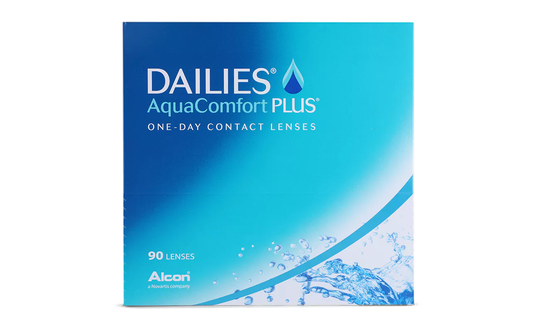
Many standard sunglasses frames can be glazed with prescription lenses, but wraparound styles are harder to make in strong prescriptions. If you wear contact lenses, the contact lens guide explains why sunglasses are still worth wearing.
Looking after your glasses
A hard case protects glasses far better than a pocket or bag. The cases section has hard shells and soft pouches, and a glasses chain or stand from the holders range keeps reading glasses from going missing. Clean lenses with lukewarm water, a drop of washing up liquid and a microfibre cloth, and avoid paper towels or clothing, which can scratch coatings.
Quick checklist
- Prescription from a sight test within the last two years.
- PD measured, or added by your optician.
- Frame numbers copied from a pair that fits.
- Lens material and coatings chosen for your prescription.
- Sunglasses with UV400, UKCA or CE marking and the right filter category.
- A case for every pair.
- Under 16 or registered sight impaired: buy through a registered optician.
Common questions
Can I use an old prescription to order glasses?
You can, but your eyes may have changed. If your last test was more than two years ago, or things look less sharp than before, book a sight test first.
Can I order glasses online for my child?
In the UK, glasses for children under 16 and for people registered as sight impaired must be supplied by or under the supervision of a registered optician, doctor or optometrist. Many online shops therefore do not sell them.
Why do my new glasses feel strange?
A new prescription, frame shape or lens type can take a few days to get used to. If headaches, double vision or blurred vision last longer than about a week, ask the shop to check the order against your prescription and see your optician.